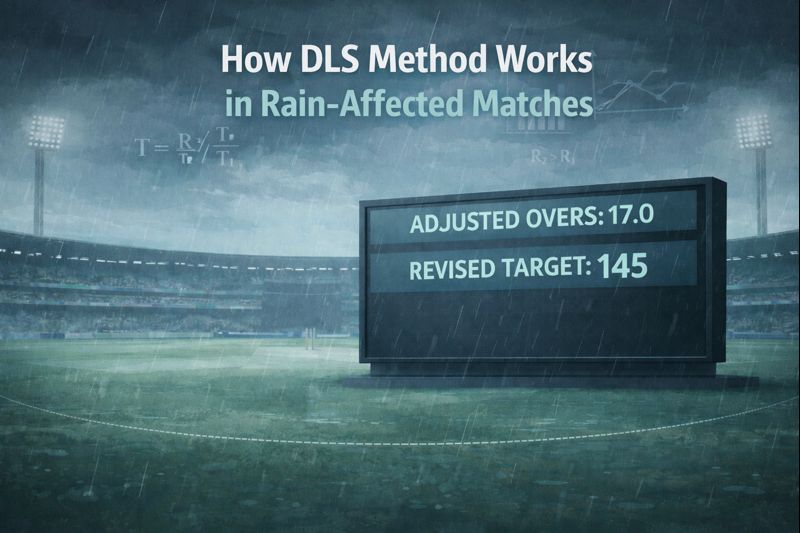
Rain interruptions are common in limited-overs cricket, and they often create an uneven playing field for teams. To solve this problem and keep matches fair, cricket uses the DLS method. This system helps recalculate targets when overs are reduced due to rain or bad weather.
What Is DLS Method in Cricket?
The DLS method is used to recalculate targets in rain-affected limited-overs matches such as ODIs and T20s. It ensures fairness by adjusting the target score based on the number of overs and wickets available to the chasing team.
Instead of simply reducing overs, the DLS method considers how much scoring potential a team actually has left.
Full Form of DLS Method
The full form of DLS is Duckworth-Lewis-Stern Method.
It is named after statisticians Frank Duckworth, Tony Lewis, and Steven Stern, who developed and later improved the system.
Why DLS Method Is Used
When rain interrupts a match, both teams may not get to play the same number of overs. This creates an imbalance, especially for the team batting second.
The DLS method solves this issue by:
- Adjusting targets fairly
- Considering lost overs due to rain
- Balancing scoring opportunities for both teams
Without DLS, rain-affected matches could produce unfair results.
How DLS Method Works
The DLS method is based on the concept of resources. A team’s ability to score runs depends on two main factors:
Resources Used
Overs Remaining
More overs mean more time to score runs.
Wickets Lost
Teams with more wickets in hand can score faster.
Key Rule:
👉 More overs + more wickets = higher scoring potential
The DLS method calculates how many resources remain for the chasing team and adjusts the target accordingly.
Simple DLS Calculation Example
Let’s understand DLS with a simple example:
- Team A scores 250 runs in 50 overs
- Team B’s innings is reduced to 30 overs due to rain
Since Team B has fewer overs, chasing 251 runs would be unfair. The DLS method calculates a revised target based on:
- Available overs
- Wickets remaining
The new target is usually lower than the original score, making the match competitive again.
Difference Between DLS and Old Duckworth-Lewis Method
- The old Duckworth-Lewis (DL) method was designed for low-scoring matches
- The DLS method is an updated version
- It is better suited for modern high-scoring cricket, especially T20s and ODIs
The DLS system more accurately reflects today’s aggressive batting styles.
Common Misunderstandings About DLS
It’s Not Random
DLS is based on mathematical models and historical data, not guesswork.
It Considers Both Wickets and Overs
Many fans think DLS only reduces overs, but it also carefully accounts for wickets lost, which is crucial.
Conclution
The DLS method plays a vital role in keeping rain-affected cricket matches fair and competitive. While it may seem confusing at first, understanding its basic principles makes it much easier to follow.
Also Read: What Is Powerplay in Cricket? Rules, Types & Overs Explained